

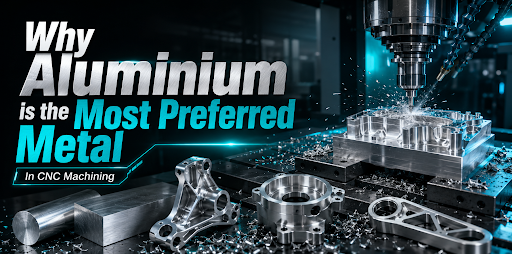
Manufacturing processes today rely heavily on metals that are dependable, efficient, and flexible enough to cater to varying industrial needs. In all areas of industry, ranging from aerospace parts, automotive components, electronics, and medical devices, there is always a search for metals that offer an excellent combination of weight, strength, durability, and affordability. Such considerations have ensured that aluminium machining remains a preferred choice across industries that require precision-engineered components.
Aluminum provides a unique set of features that cannot be matched by other metals. It is light and strong, resistant to corrosion, formable, and very compatible with CNC machining. This makes aluminum perfect for manufacturing complex components requiring precise measurements and good surface quality.
A Material That Supports Faster Production :
Aluminium’s one of the biggest strengths is machinability. It works well when cutting compared to harder metals, and therefore makes production faster with reduced wear of cutting machines. Machines such as CNC machines can machine aluminum without straining tools and machines used in the process.
This brings several operational benefits:
- Faster cutting speeds
- Reduced machine downtime
- Better surface finishes
- Lower manufacturing costs
- Improved production efficiency
Such advantages would be very useful for industries requiring mass production and rapid prototyping to increase efficiency without any reduction in quality.
Lightweight Without Sacrificing Strength :
The importance of minimizing weight in many industries is gaining increased recognition, particularly in aerospace, transport, and electronics sectors. Aluminium is recognized as a material with good strength-to-weight characteristics, which explains its widespread use in various industries, where reduction of the weight is a prerequisite for increasing performance.
Examples of applications include:
- Aerospace firms utilize aluminum components for better fuel economy.
- Automobile companies reduce the weight of vehicles to increase efficiency.
- Electronics producers prefer aluminum cases due to their durability and low weight.
Aluminum, although lighter than steel, is able to perform under harsh operating environments if properly engineered.
Excellent Corrosion Resistance :
One more reason that makes aluminium highly preferable is its inherent corrosion resistance. As soon as aluminium comes into contact with oxygen, an oxide layer forms on the surface, protecting it from moisture and any damage from the environment.
This means that aluminium can be used in:
- Outdoor equipment
- Marine applications
- Industrial machinery
- Medical instruments
- Energy and power systems
The manufacturers use aluminium to increase the lifespan of their parts without having to undergo much maintenance.
Ideal for Complex CNC Designs :
The modern CNC machine system is capable of making very complicated designs. Aluminium proves to be a perfect fit for these designs due to its flexibility and stability during machining.
The manufacturers can achieve:
- Thin-wall structures
- Complex cavities
- Detailed contours
- Precision holes
- Smooth edge profiles
Flexibility is particularly beneficial in sectors that need components made from materials with accurate measurements and consistent results.
Engineers in many engineering companies are also drawn to using aluminium because they can easily use it for custom-built parts at both low and high volume production rates, with guaranteed precision and accuracy.
Thermal and Electrical Conductivity Advantages :
Aluminium is highly recommended in industries that require efficiency in thermal and electrical conductivity. Due to its thermal characteristics, it is best suited for applications requiring heat sinks, cooling, and enclosures for electrical equipment.
Some common applications include:
- Electronic housings
- Heat exchangers
- Cooling plates
- Semiconductor equipment
- Industrial automation systems
Due to its efficient thermal dissipation ability, it increases the performance and durability of critical systems in manufacturing plants and other sectors.
Surface Finish and Aesthetic Appeal:
Along with performance, aluminum also comes with great aesthetic qualities. Aluminum parts made using CNC machining processes provide a clean look, which is perfect for both industrial and commercial uses.
Some of the ways manufacturers can increase the appearance qualities of aluminum are through processes like:
- Anodizing
- Powder coating
- Polishing
- Sand blasting
- Brushing
They provide additional protection against corrosion while also adding a professional look to finished goods.
Why Precision Matters in Modern Manufacturing :
With growing demands for tighter tolerance and consistency in manufacturing, manufacturers need materials that will allow high-accuracy production processes. It is here that aluminium machining becomes an important part of advanced engineering projects.
Highly advanced CNC machine shops nowadays offer multi-axis machining, ultra-precision turning, and an advanced inspection process that ensures uniform quality throughout every piece manufactured. Aluminium works perfectly in these machines as it offers great dimensional stability when being machined.
Some manufacturers also opt for aluminium as a material because of its suitability for:
- High repeatability
- Low vibration when cutting
- Efficient chip evacuation
- Uniform dimensional accuracy
- Efficient automated production
In the current CNC machining process that enables the manufacture of products with very small tolerances, aluminum ranks among the best metals due to its reliability within the environment where accuracy is key.
Sustainability and Recyclability :
Industrial production processes are increasingly adopting sustainability principles, and aluminium is one metal that stands out because it is highly recyclable without compromising its fundamental characteristics.
The amount of energy required for recycling aluminium is much lower compared to when new materials need to be manufactured using primary resources.
Aluminium is favoured in several industries due to the combination of sustainable production and effective engineering characteristics.
Applications Across Multiple Industries :
Aluminium can be considered versatile enough to work for many different industries due to its combination of strength, light weight, and machinability.
These industries, among others, regularly use aluminium parts:
- Aerospace
- Automotive
- Healthcare
- Semiconductor manufacturing
- Oil and gas
- Power generation
- Fire and safety systems
- Industrial automation
When it comes to critical assembly, structural elements, and precision housings, aluminum proves time and again to be an effective choice within different industries.
Engineering Efficiency Begins with the Right Material:
Choosing the right material is always considered one of the most crucial aspects of any manufacturing operation. Aluminium still reigns supreme due to its combination of speed, accuracy, strength, and flexibility, which are qualities required by the current CNC machining operations. With increased demands for light, strong, and accurate components in today’s industries, aluminium machining becomes indispensable.
For those companies seeking reliable engineering services coupled with advanced manufacturing technologies, it is wise to think of Gemsons, as they provide superior solutions incorporating precision CNC machining, 5-axis machining, bespoke machined parts, CNC turning and milling, and highly precise machining across a wide range of industrial applications.