
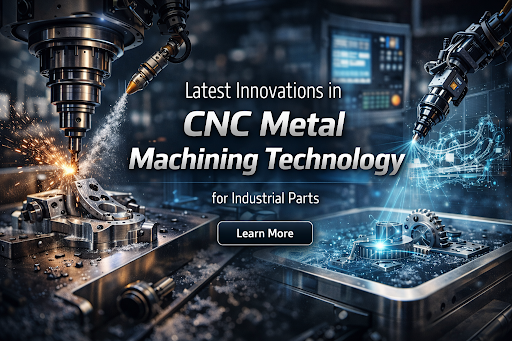
Manufacturing technology has been developing at an unprecedented rate as manufacturers look for precision and efficiency. One of the key factors behind this revolution is the use of CNC metal machining, which has been making significant advances thanks to the implementation of cutting-edge technologies. Modern machining techniques are becoming more advanced in their ability to be fast, precise, and versatile in meeting industrial demands.
Smart Automation and AI Integration
In terms of modern-day technology, perhaps two of the most significant developments would be those associated with artificial intelligence and robotics. Current CNC machines are no longer restricted to carrying out instructions that have been programmed into them; rather, they are able to process data and modify their behavior accordingly.
These developments result in:
- Reduce material waste
- Improve production speed
- Minimize human intervention
- Enhance overall consistency
The monitoring systems with AI support the anticipation of future repairs and maintenance, helping avoid downtime. Such solutions are especially relevant to industries with a continuous cycle of production operations.
Multi-Axis Machining for Complex Designs
Nowadays, CNC machines can offer multi-axis machining capabilities, which allows creating complex geometrical designs without spending much time and effort. Using multi-axis milling enables machining parts in one position thanks to innovations like 5-axis and 7-axis milling.
Thanks to this approach, manufacturing is becoming more efficient due to:
- Reduce errors while positioning the machine
- Reduced manufacturing time
- Decrease in tool wear
For sectors such as the aerospace industry and the manufacture of medical devices, this type of machining is critical since there is no room for errors.
Digital Twins and Simulation Technology
Another innovative solution is based on the use of digital twins, virtual representations of physical systems. This technology helps simulate processes and optimize production by predicting possible errors.
Some of the advantages of the use of simulations include:
- Design validation
- Optimization of tool paths
- Reduced expenses on trial-and-error methods
This methodology leads to better planning and proper utilization of resources. It also follows best practices employed by experienced providers such as Gemsons, whose key emphasis lies in accuracy and verification of processes before production commences.
Advanced Materials and Tooling Innovations
There have been new developments in cutting technology to facilitate the machining of tough but lightweight materials. New coatings on cutting tools and other advanced features help modern machines work effectively with metals such as titanium.
Additionally, faster machine speeds lead to improved surface finish quality and reduced machine cycle times. These improvements indicate that CNC metal machining is becoming more versatile and can meet the requirements of different industries such as automotive, military, and electronics.
IoT-Enabled Machining Systems
The advent of IoT technology has made it possible to interconnect machining processes using machines, systems, and operators using the internet. In essence, CNC systems are becoming more effective because of real-time data processing and monitoring.
Benefits offered by IoT-based CNC machining solutions include:
- Remote monitoring of machine performance
- Real-time production analytics
- Faster troubleshooting
Such a level of connectivity will make manufacturers more flexible and responsive to changes.
The Road Ahead: Precision Meets Intelligence
With technological developments constantly evolving, the future for CNC metal machining involves the integration of precision engineering with smart systems. The adoption of smart machining systems has become more popular among manufacturers who incorporate automation, simulations, and connectivity within their processes.
For companies wishing to maintain their competitiveness in this sector, remaining relevant and updated about these advancements becomes crucial. Engaging with professional companies such as Gemsons, known for their expertise and commitment to quality, can be beneficial in ensuring advanced machining technologies.
Integrating current trends such as CNC machining services, precision engineering, metal fabrication, automated machining systems, and high-speed CNC machining could provide additional advantages.