

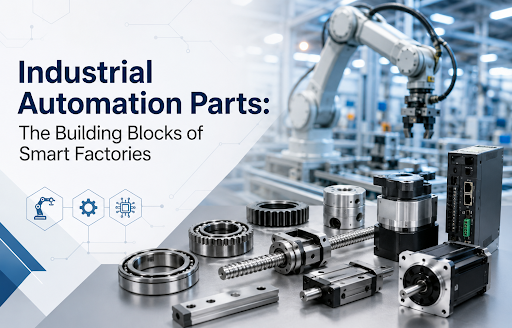
The modern period has witnessed a unique transformation that has taken place in the industry. With the adoption of the idea of system connectivity, monitoring on a real-time basis, and data-driven processes, the development of smart factories is bound to take place. Thereby, industrial automation parts become essential for the smooth functioning of smart factories.
Regardless of whether you operate in the assembly of cars or in semiconductor manufacturing, the industrial automation components assume a key position in improving efficiency, minimizing errors, and sustaining the quality standards of products. Although the components may not be significant, the integration thereof makes way for extremely smart manufacturing processes.
The Rise of Smart Manufacturing
The smart factory takes advantage of technologies such as automation and data analytics, among others, to make the manufacturing process highly adaptive. The smart factory is quite different from the conventional manufacturing systems in that it can respond and adapt based on data input without necessarily requiring any human input.
Some of the key driving factors in the shift to smart factories include:
- Higher production efficiency
- Improved product consistency
- Reduced operational costs
- Enhanced workplace safety
- Faster response to market demands
In order for the above objectives to be realized, some parts of the automation equipment have to be precisely manufactured in order to ensure smooth operation.
How Automation Components Improve Operational Efficiency
Manufacturing firms are always looking for ways to increase their efficiency by increasing production and reducing wastage. Automation technology plays an integral role in this by using automation hardware to enable machines to operate at faster, more efficient, and more precise rates compared to manual efforts. Communication within the system can help identify potential problems before they turn into costly problems.
Coordination at this level will ensure the smooth running of production lines, proper utilization of resources, and support continuous improvement programs.
Essential Components Behind Factory Automation
As stated earlier, automation systems comprise several interlinked components. These are designed to perform unique roles in ensuring the efficiency of the operation.
Among the most common automation components used are:
Sensors
Sensors gather live data about machinery and manufacturing processes. Some of the key variables sensed include:
- Pressure
- Temperature
- Position
- Flow rate
- Vibration
The information is further analyzed by the automation system so that decision-making can be done and process control maintained.
Actuators
This involves the parts that convert energy sources into motion in automation systems. The actuators are in charge of controlling valve movements, robotic arm motions, conveyor movements, and many other processes.
Control Systems
There are several PLCs, programmable logic controllers, and other similar machines that perform the functions of a brain in automation systems. The information received is analyzed using pre-programmed instructions, and the machinery is controlled.
Precision Machined Components
Most automation systems consist of components that enable precision, durability, and consistency. High-quality components help in the smooth and consistent manufacturing process.
Why Precision Matters More Than Ever
In modern manufacturing plants, slight variations of components cause significant differences when it comes to the function of automation systems. Precision engineering guarantees the functionality of automation machinery.
Precision engineering matters most in the following industries:
- Aerospace
- Oil and Gas
- Healthcare
- Semiconductors
- Power and Energy
- Instrumentation
In such industries, it becomes necessary for manufacturers to use parts that function efficiently even in harsh environments. The value of companies that are skilled in CNC machining and the production of customized components increases in such cases.
The Role of Quality in Automation Performance
The effectiveness of the automation equipment will depend on the performance of the components. Improperly manufactured components can cause:
- Unexpected downtime
- Increased maintenance costs
- Reduced production efficiency
- Safety risks
- Premature equipment failure
That is why manufacturers must ensure the presence of quality control mechanisms in the production process. Inspection systems, test systems, and global quality standards help in meeting the required standards before installation.
Moreover, the quality of the industrial automation parts contributes a lot to the success of the automation process. The better the quality of the components used, the less likely any issues are to arise during the operation process.
How Advanced Manufacturing Supports Automation
Due to advancements in automation technologies, the need for high-tech machines has increased, and thus, there is a requirement for manufacturers to employ advanced manufacturing processes. This is facilitated by using advanced machine processes, which can make very accurate components.
Some of the advanced manufacturing techniques include:
- Multi-axis CNC machining
- CNC turning and milling
- Precision welding
- Custom assembly
- CAD/CAM manufacturing techniques
- Automated inspection systems
These make it possible to form complex shapes, maintain narrow tolerances, and cater to both low production quantities and mass production.
Industries Benefiting from Automation Components
Automation has not been limited to factories alone. Today, modern firms in all sectors adopt automation technology as a means of keeping pace with their competitors.
Such industries include:
Aerospace
Highly accurate components are essential for ensuring that stringent safety and performance standards are adhered to in aviation.
Energy and Utilities
Automated solutions improve monitoring and control throughout energy production and distribution systems.
Healthcare
Manufacturers of medical devices rely heavily on precise components for consistent quality and compliance.
Water Treatment
Automated systems support efficient resource management and process control.
Industrial Machinery
Automation improves machine effectiveness, reduces machine breakdowns, and increases efficiency.
Factors to Consider When Selecting Automation Components
There are several factors that require consideration when choosing the system components. Besides the environmental conditions under which automation is required, there are also some performance criteria that must be met. The list of criteria includes requirements regarding system integration and reliability. Industrial automation parts used under harsh environmental conditions should have high tolerance to temperature fluctuations, vibrations, dampness, and constant operation. When making decisions on automation equipment, manufacturers should consider the potential for its further development and growth.
These two sections complement each other well, add value by extending the content to about 150–180 words, and increase the relevance of automation, manufacturing efficiency, and reliability keywords without changing the blog’s structure.
Building the Future of Smart Factories
The future of manufacturing will keep being influenced by factors such as automation, connectivity, and intelligence in decision-making. In the future, as the sophistication level in manufacturing increases, there will be a need for quality components that will enable the development of efficient processes in the production environment.
When it comes to companies willing to develop their processes through high-quality engineering solutions, including industrial automation components, CNC machine shop services, machined parts, custom assembly, and industrial replacement parts, it is imperative to invest in the components that can make the processes effective.
Gemsons proves to be a reliable partner for companies that require reliable manufacturing services. With years of experience in manufacturing services, cutting-edge machine shop facilities, high-quality assurance, and an impressive reputation in several industries, Gemsons offers industrial automation parts suitable for smart factories.