

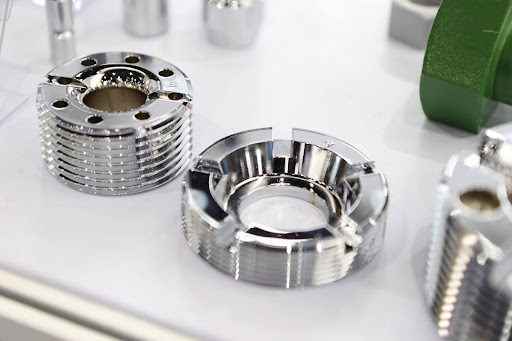
Modern manufacturing relies on precise components that suit perfectly and function with consistency, even with mass production. Whether industrial machinery, automobile parts, or engineering projects are involved, even the tiniest variation may impact the functionality, quality, and durability of the machinery. This is why precision machining parts have become an essential need rather than an advantage. Nothing occurs randomly; all aspects of manufacturing happen with controlled factors of perfection and quality of engineering practices.
Understanding Accuracy Beyond Measurements
In many ways, accuracy in machining means precision or small tolerance values, but it means much more than that. In effect, accuracy means delivering parts that meet design specifications every time, not just occasionally.
Dimensional accuracy, surface quality, geometry, and functional orientation are all encompassed in accuracy. Even when parts are produced accurately in several dimensions, they may not necessarily be accurate in some aspects regarding their functional orientation. For instance, even when
Several factors influence machining accuracy:
- The stability and calibration of machines
- Quality of cutting tools and fixtures
- Material behavior during machining
- Operator expertise and process control
By integrating these elements, the manufacturer can produce the component that will work seamlessly in an assembly.
Why Consistency Is Just as Important
While accuracy focuses on how close a part is to specifications, consistency ensures that the same level of accuracy is maintained across batches. In real-world manufacturing, consistency makes or breaks efficiency. Inconsistent parts can lead to delayed assembly, higher rejection rates, and unexpected failures in the field.
Consistency requires repeatable processes. Standardized workflows, controlled environments, and documented procedures make sure that every part made today matches the one made yesterday. This reliability is crucial for industries dependent on long-term supply continuity.
Role of Advanced Machining Technologies
Accuracy and consistency have greatly improved with the evolution of CNC systems. Modern machining centers can control speed, feed rates, and depth of cut so accurately that human error is minimal. Multi-axis capability further reduces variability by eliminating multiple setups.
In the middle of complex manufacturing operations, precision machining parts benefit from:
- High-speed CNC milling and turning
- Automatic monitoring of tools
- Error-free programming because of CAD/CAM integration.
These technologies are helping to translate digital designs into physical components with exceptional repeatability.
Managing Tolerances in Real-World Production
In design drawings, ideal tolerancing can be specified, but once a project is placed in a production environment, variables enter that must be carefully controlled. Deflection, vibration, or temperature changes occurring over prolonged machining processes may all affect dimensions. Controlling variables for tolerance goes beyond what a machine is capable of.
By making the tolerance bands more realistic and keeping track of the performance of the parts during the machining process, the possibility of scrap as well as the cost of repeated machining can be reduced.
Material Selection and Its Impact
The most advanced machinery in the world cannot make up for poorly chosen materials. Metals and alloys all behave differently under heat, pressure, and cutting forces. Understanding material properties is essential for maintaining tight tolerances.
Key considerations include:
- Thermal expansion during machining
- Internal stresses within the raw material
- Machinability and tool wear rates
By choosing the material grade and machining process properly, manufacturers can minimize distortion and ensure dimensional stability throughout the process.
Process Control and Quality Checks
Accuracy and consistency in the program result from rigorous inspection and validation exercises carried out in the program. Coordinate measuring machines, gauges, and surface testers are important in validating results.
Quality control should and does emphasize:
- In-process inspections rather than end-of-process inspections
- Statistical process control for early detection of trends
- Full documentation and traceability for each lot
By doing so, any deviation is culled out and addressed before large quantities are affected.
Skilled Expertise Behind the Machines
Although automation has changed the face of machining, human skills are still required. Skilled machinists and engineers know the effects of minute variations in tools and machinery, parameters, or material. They fine-tune processes and can quickly react to adverse situations.
Continuous training and process analysis assist in improving performance with new materials, designs, and tolerances without any impact on product quality.
Designing for Manufacturability
Accuracy and consistency also must begin in design. Parts that are designed with manufacturability in mind are easier to machine. Accurate machining is achieved when tolerances are clear, surface finish requirements are appropriate,
This will ensure that the end product behaves in the desired way and that the manufacturing and design teams are on the same page.
Some of the key factors that need to be considered during the manufacturing process
Traceability and Documentation as Quality Enablers
In precision-oriented sectors, documentation is an important factor in achieving and keeping precision over a period of time. Recording machining details, material lots, inspection data, and version changes in machining ensures the generation of traceability in the production process. This ensures quick Identification of root causes in case of errors in products being manufactured.
This standards-based documentation enables repeated processes, especially in the case of repeat jobs or heritage parts. This ensures that if there is existing data available, manufacturers can recreate the part, if needed, after several years, without sacrificing quality.
Where Precision Meets Practical Reliability
When it comes to practical usage, machining goes beyond mere spec qualifications to ensure reliable performance. When accuracy, reliability, advanced technology, and expertise are aligned, industries can be served with conviction. In this lineup, precision machining parts are where detail and reliability meet in harmony.
A Perspective Informed by Manufacturing Experience
Several years in the industry with complex components have revealed that accuracy can be achieved through a disciplined process and not through taking shortcuts wherever possible. In using experiences in CNC machining services, components with a high level of accuracy, customized machined components, high-precision CNC components, and industrial machining solutions, processes continue to improve in making an effective finish. For companies wanting the best combination of accuracy and consistency in their operations, it would be a good idea for them to consider Gemsons, as a reputable provider in this industry, based on a manufacturing and engineering process perspective.