
In terms of modern manufacturing, it is considered that the process may have a significant influence on product quality, cost, and scalability. The most used processes for manufacturing purposes include CNC machining and die casting. Both processes have several advantages, depending on specific requirements and production volume. Many organizations compare these processes for the efficient production of die-cast parts and CNC machining parts.
Comparing these processes will help organizations make decisions according to specific requirements.
Understanding CNC Machining
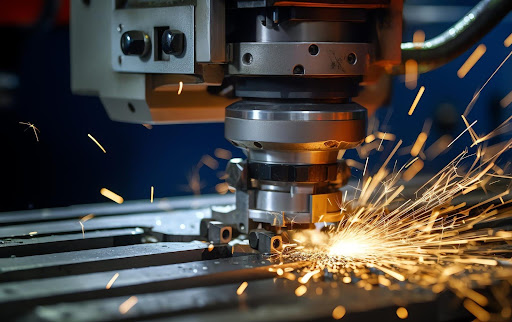
The CNC (Computer Numerical Control) machining process is considered a subtractive manufacturing process. The process includes removing material from a block using CNC machines, resulting in a desired shape.
Key Features of CNC Machining
- High precision and tolerances
- Complex geometries
- Applicable for a wide range of materials
- Ideal for low to medium volume production
CNC machining is thought of when the requirements are for the production of precise and accurate products for specific purposes. It ensures the production of similar products every time due to programming.
Where CNC Machining Excels
- Aerospace parts and automotive parts
- Medical devices
- Custom metal fabrication
- Rapid prototyping
However, it is a labor-intensive process. It may be a costly process when the requirements are for large-scale production because of the waste generated during the process.
What Is Die Casting?
Die casting is a process in which molten metal is injected into a mold under high pressure. The metal then cools down and assumes the shape of the mold.
This process is often used to produce die-cast parts in large quantities with a high-quality finish.
Key Features of Die Casting
- Die casting can be done at a fast rate.
- Die casting produces a smooth finish.
- No further processing is required.
- Die casting can be used in mass production.
Die casting can be done using non-ferrous metals like aluminum, zinc, and magnesium. It can be used to produce intricate parts with thin walls.
Comparing CNC Machining and Die Casting
To help you decide which process is more suitable for your project, here is a detailed comparison of CNC machining and die casting:
1. Production Volume
- CNC Machining: Ideal for low to medium-volume production
- Die Casting: Ideal for high-volume production
If you need thousands of copies of your product, then die casting would be more cost-effective.
2. Cost Efficiency
- CNC Machining: Higher cost per unit due to labor and material wastage
- Die Casting: Lower cost per unit due to economies of scale, although the initial cost of tooling is high
Die casting is an economical option when the production quantity is large. However, the cost of tooling is initially high.
3. Precision and Tolerances
- CNC Machining: Provides better precision and tolerance
- Die Casting: Provides moderate precision. However, the precision may have to be improved by secondary operations.
If the accuracy of the final product needs to be of the order of microns, CNC machining is the better option.
4. Material Flexibility
- CNC Machining: Can work with a variety of materials
- Die Casting: Can work only with a few metals
This makes CNC machining a more flexible option.
5. Surface Finish
- CNC Machining: Requires secondary finishing operations
- Die Casting: Provides a smooth finish without the need for secondary finishing operations
Die casting eliminates secondary finishing operations, saving you money and time.
When to Choose CNC Machining
CNC machining is the right option in the following cases:
- You require prototypes or production runs
- It requires a high level of precision
- You are using a variety of materials
- You expect changes in the design during the development process
It allows flexibility and quick adjustments, making it ideal for product development stages.
When Die Casting Makes More Sense
Die casting becomes the preferred option when:
- You need large quantities of identical parts
- The design includes complex shapes with thin walls
- Consistency across batches is crucial
- You want reduced finishing and assembly work
It is particularly effective in industries like automotive and electronics, where mass production is essential.
Balancing Quality, Cost, and Efficiency
In the real world, it is not always a straightforward case of one or the other. Most often, the two methods are used in a hybrid fashion.
For instance:
- When CNC machining is used for making prototypes and for initial design validation
- When die casting is used for large-scale production
This hybrid approach ensures both precision and cost efficiency.
Manufacturers these days are also keen on optimizing the design of tools, increasing the lifespan of molds, and making use of advanced machining techniques.
Industry Trends and Advancements
Manufacturing industry trends and advancements are constantly changing due to various advancements in automation technology, digital designs, and materials science. Both machining and die casting processes are benefiting from these advancements.
Some of the industry trends and advancements are:
- Integration of CAD/CAM software for precise designs
- Automation of machining processes for faster production
- Improved mold designs for extended tool life
- Lightweight alloys for better performance
These advancements are improving the machining and die casting processes for various industries.
Making the Right Manufacturing Decision
The decision between machining and die casting is not based on one being superior to the other. Rather, it is entirely based on one being more suitable for application than another.
The factors that need to be considered while choosing between machining and die casting are:
- Budget and production scale
- Material requirements
- Design complexity
- Time-to-market
A clear understanding of these factors can help businesses avoid unnecessary costs and production delays.
Precision Meets Scale: Finding the Ideal Manufacturing Approach
The manufacturing method is one of the most significant reasons why a product is successful in today’s competitive world. Whether it is related to precision, scale, and cost-effectiveness, both methods of manufacturing, such as CNC machining and die casting, have a lot to offer. For businesses that specialize in die-cast parts, it is vital that there is a combination of knowledge and a manufacturing method that is able to meet business requirements.
Additionally, there is much that businesses can benefit from, such as services that include precision engineering, custom metal components, aluminum die casting, zinc die casting, high-pressure die casting, CNC turning and milling, and industrial manufacturing services. Manufacturers like Gemsons have a combination of knowledge, technology, and understanding of manufacturing processes that can be a defining factor in today’s business environment.