

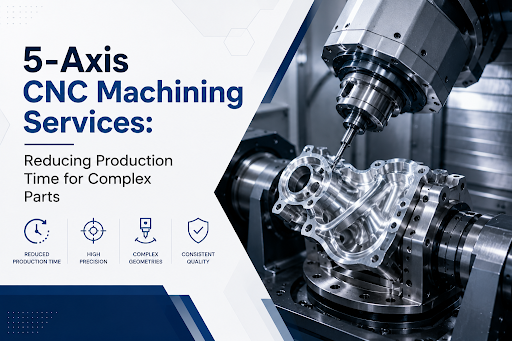
In the current industry, there is a requirement for the production of lightweight but durable parts capable of achieving high levels of efficiency in extremely difficult conditions. Such engineering products, like those used in aerospace and automotive industries and electronics, have been increasingly demanding a special type of engineering material that could guarantee an outstanding strength-to-weight ratio, corrosion resistance, and numerous application opportunities. Aluminum is the perfect example of such a material, and, in order to achieve the desired properties, aluminum machining is required.
However, there is more to the issue than merely the utilization of a particular type of material. Quality machining processes, suitable tooling, and quality controls would substantially increase the results obtained.
Why Aluminium Is a Preferred Material Across Industries
Several reasons make aluminium one of the preferred materials in manufacturing essential industrial components.
Some of its key benefits include:
- Lightweight and sturdy composition
- High corrosion resistance
- Outstanding thermal and electric conductivity
- Ease of machining when compared to most metal components
- Sustainability and the recyclable nature of the material
- Economical production at high volumes
This enables engineers to manufacture components that are lighter yet do not affect the strength of the system.
Some applications in which aluminium components are used include aerospace, power generation, instrumentation, water purification, semiconductor devices, and many more, since these components offer efficient performance.
Designing Components for Machining Efficiency
Designing is an important aspect when it comes to any project involving machining. Properly designed aluminum parts not only increase the ease of machining but also decrease the manufacturing period, wastage of materials, and costs involved in the process. The engineers have to take into account various aspects such as the thickness of the walls, the radius, the depth of the holes, and tolerances.
The simplification of the geometry wherever possible may increase the efficiency in the machining process without compromising on the functionality of the part. This can be achieved by applying machining-related design concepts from an early stage in the design process.
Material Selection Matters
Aluminium does not exhibit identical properties when being manufactured. It becomes easier to achieve the desired result after selecting the right alloy.
The factors that must be considered include:
- Mechanical strength requirements
- Corrosion resistance needs
- Thermal conductivity requirements
- Surface finish expectations
- Application-specific environmental conditions
Common aluminium alloys include 6061, 6082, and 7075. The selection process starts by understanding the required specifications. This makes it possible for a manufacturer to select the best material.
Optimizing Tool Selection for Better Results
To improve the accuracy of machining, the type of tooling becomes important.
For aluminium components, it is preferable to use:
- Sharp cutting tools
- Carbide tooling
- High-speed machining cutters
- Tools designed specifically for non-ferrous metals
Being a relatively soft metal compared to some engineering alloys, aluminium tends to produce built-up edges, surface imperfections, and dimensional inaccuracies when the wrong tools are used.
Keeping the cutting tools sharpened and replacing worn-out cutters ensures tighter tolerances and increased productivity.
The Role of Cutting Parameters in Precision Manufacturing
In order to ensure both efficiency and high precision, machining parameters should be selected correctly.
Some key machining parameters include:
Cutting Speed
As compared to other metals, aluminium permits higher cutting speeds, resulting in higher efficiency and precision.
Feed Rate
An appropriate feed rate prevents excessive heat generation and minimizes surface defects.
Depth of Cut
Balancing between these factors contributes to high precision by ensuring dimensional stability and eliminating vibrations and tool wear.
With the correct control of all these parameters, precise parts with good reproducibility can be manufactured.
Achieving Superior Surface Finishes
Some of the most important strengths of aluminum machining include the ability to achieve smooth surface finishes that are good enough for various applications.
The following aspects affect surface finishes:
- Tool geometry
- Cutting parameters
- Coolant application
- Machine rigidity
- Material grade
For example, the quality of surface finishes is very important in cases when aluminum is used in aerospace applications, instrumentation, and electronics.
Additional finishing treatments may be done to increase durability and appearance. These include operations like anodizing, polishing, or coating.
Managing Heat and Chip Control
Despite good thermal conductivity, problems may arise due to inadequate machining techniques.
Proper heat management prevents:
- Material distortion
- Dimensional inaccuracies
- Tool wear
- Surface defects
Efficient chip removal is equally essential. Continuous chips from aluminium are prone to disrupting machining processes unless efficiently evacuated from the workpiece.
The use of a proper coolant system and chip removal techniques ensures smooth operation of the machining process, ensuring consistency in output quality.
Quality Control for Critical Components
Most industrial applications have very high tolerance levels and very strict standards in terms of quality.
Such a quality control program involves the following:
- In-process inspections
- Coordinate Measuring Machine (CMM) verification
- Statistical process control
- Surface roughness testing
- Dimensional validation
Component manufacturers that service industries like aerospace, energy, health care, and others always have elaborate quality control programs designed to meet customers’ specifications. High-quality machining processes within CNC systems can ensure micrometer-level precision through precision machining and inspection processes.
The Growing Importance of Advanced CNC Technologies
With more complex component designs becoming available, manufacturers are opting for sophisticated machining techniques to ensure efficiency and accuracy.
Current machining technology includes:
- Multi-axis machining
- Turn-mill machining
- High-speed machining
- Inspection system automation
- Precision engineering assembly integration
This enables manufacturers to manufacture intricate geometries in less time while adhering to tight tolerances.
For industries in need of customized design features, advanced CNC machinery offers the necessary flexibility to satisfy their requirements.
Precision Engineering That Supports Long-Term Performance
Performance of a product used in industry is not only dependent on the quality of the material, but it is equally dependent on the level of manufacturing skills too. Aluminum machining is done through an effective combination of material selection, proper tooling, process control, and inspection, ensuring light and robust performance under challenging conditions.
If your business is looking for reliable manufacturers, then Gemsons is the company you can trust to give you high-quality precision manufacturing services. Being an experienced and reputable precision engineering and manufacturing company, Gemsons is equipped with a wide range of precision engineering services, such as CNC machining services, 5-Axis machining services, precision machined components, CNC turn-mill components, and complex assemblies. Gemsons helps industries achieve exceptional quality, accuracy, and long-term performance across critical applications.