

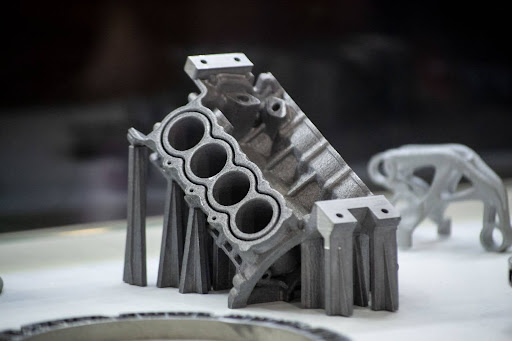
The automobile industry and the industry of automation rely to a great extent on die-cast parts in order to ensure consistent performance, accuracy, and economy. From transmission cases and motor housings to robotic arms and control panels, die casting makes it possible to produce complex metal parts with close tolerances. But to accomplish this degree of accuracy is not as simple as pouring liquid metal into a mold. There is a great deal of science involved in every finished part.
Why Precision Matters in Automotive and Automation
Both industries throw components into high-performance and reliability, critical environments. Automotive components are exposed to high temperatures, vibration, and mechanical stress. In an automation system, slight dimensional variation can easily disorient the alignment, reduce efficiency, or cause premature wear.
Precision in die casting has an impact on:
- Structural integrity of load-bearing components
- Heat dissipation in electric vehicle (EV) assemblies
- Surface finish for sealing and assembly
- Weight optimization without compromising strength
Being able to meet these requirements underlies the use of advanced tooling design and controlled casting parameters.
Common Precision Challenges in Die Casting
Although die casting allows for repeatability, there could be some technical challenges that a manufacturer might be faced with, for instance:
1. Porosity and Air Entrapment
During metal injection, gas pockets may be prompted, leading to internal voids, which in turn will deteriorate the components and the machining performance.
2. Dimensional Variations
Due to thermal expansion and contraction, slight distortions may result after cooling. For automotive assemblies, even fractions of a millimeter matter.
3. Tooling Wear
Dies are exposed to extreme temperature and pressure extremes. Eventually, wear may change the cavity sizes, thus causing inconsistency of the parts along with other effects.
4. Surface Defects
Cold shuts, flow marks, or incomplete filling may result if injection speed and temperature are not adjusted to each other properly.
To overcome these issues, manufacturers today have advanced tools like simulation software, precision CNC, machined molds, and strict process monitoring to rely on when figuring out the right parameters and avoiding defects.
Material Selection and Process Control
Automotive and automation casting sectors use aluminum and zinc alloys largely because these two materials have the characteristics of being lightweight and, additionally, being resistant to corrosion. However, the reaction of each alloy to high pressure and temperature is different.
Advanced facilities are carefully controlled:
- Melt temperature and metal purity
- Injection pressure and speed
- Cooling rates within the die
- Post-casting treatments, such as trimming and machining
One example is the case of Gemsons, a company that strives for excellence in consistency of mass production by means of controlled production environments and precision tooling practices. Detailed focus on mold design and quality inspection greatly contributes to decreasing the number of defects.
The Role of Tooling and Secondary Operations
Dimensional accuracy always starts with good tooling. CNC-machined dies, optimized gating systems, and balanced cooling channels keep the change of error to a minimum even at a very high number of running cycles.
Secondary operations, in fact, continue to polish die-cast parts so that next time, they can better correspond to the technical standards of the particular industry.
- Precision machining for tightly controlled dimension areas
- Surface finishing and coating
- Leak testing of components sensitive to pressure
- Assembly integration for modules that can be easily installed
In particular for automation equipment, precision machining can refer to the process of machining after the casting, which ensures the clear and mechanical compatibility of the parts with the other components of the system.
Looking Ahead: Engineering Precision at Scale
As EVs and smart factories keep increasing, so do the expectations on die-cast parts. Lightweighting, improved thermal management, and tighter tolerances are no longer optional; they are industry standards. Manufacturers have been increasingly combining high-pressure die casting, aluminum die casting, zinc die casting, automotive die casting components, and precision casting in one flow of operation to offer products that meet the needs of the market.
Maintaining precision at the same level depends less on the machinery and more on the combination of process discipline, knowledge of materials, and quality control at every step. If these factors become the main focus, die casting will thus be a very efficient method to produce strong and performant parts for the automotive and industrial automation industries of tomorrow.