

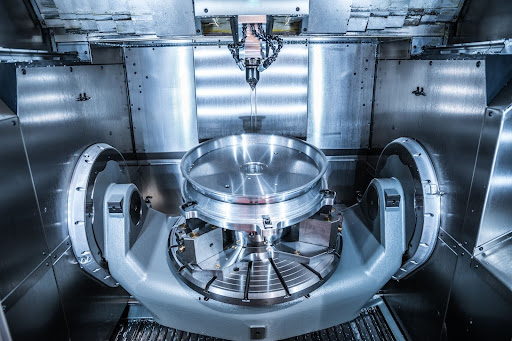
The world of robotics and automation is undergoing a paradigm shift on the manufacturing floor. Right from the assembly lines of automobiles to the production of electronics, robots are now performing tasks with an accuracy and speed that is nothing short of breathtaking. At the core of this revolution is CNC machining, a technology that makes it possible to create high-precision industrial automation parts that drive modern robotics.
CNC machining is a technology that helps manufacturers create complex components with high precision. In robotics and automation, even a slight variation in a component can impact the entire system’s efficiency. Therefore, precision machining is not just desirable but imperative.
Precision Engineering for Complex Robotic Systems
Robotic arms, linear actuators, control housings, brackets, and mounting plates all require a high level of dimensional accuracy. By using CNC machining, the company can be sure that the parts will be fabricated to the exact specifications of the blueprints. Thus, those high-speed and repetitive operations can be performed by the machines perfectly.
Automation systems are sometimes located in harsh environments. Therefore, the parts must be capable of:
- Handling continuous mechanical stress
- Resisting high temperatures
- Withstanding vibration and varying loads
- Coping with corrosive or dusty conditions
CNC machining makes it possible to work with strong and tough materials like aluminum alloys, stainless steel, brass, and engineering plastics. These materials give the necessary strength while at the same time keeping the weight to a minimum that is essential in the case of robots.
Supporting Motion Control and Structural Stability
The implementation of motion control in automation systems relies on parts being in perfect alignment. Guide rails, couplings, shafts, and housings must match each other accurately so that there will not be friction, misalignment, or wear. CNC machining helps to ensure that the manufacturing of industrial automation parts is consistent and that the parts are always exactly as specified.
High-quality machining also plays a crucial role in enhancing structural stability. It becomes a huge risk when communicating systems, especially when they have to run 24/7, and the poorly manufactured parts of the system lead to downtime or expensive repairs. Threadings done very accurately, polished surface finishes, and precise hole placements are some of the ways that load distribution can be improved, along with the long-term reliability of the components.
Manufacturers with expertise in CNC solutions are typically the first to offer a range of extra benefits, for instance:
- Advanced multi-axis machining for complex geometries
- Custom prototyping before mass production
- Stringent quality inspection procedures
- Consistent batch production for scalable automation systems
Such features are crucial when you think about the fact that automation projects often need a whole range of customized components that suit the specific operational needs.
Flexibility for Evolving Industrial Demands
Automation technology keeps evolving. With rising robotic applications, the industry is looking at lighter materials, smaller assemblies, and higher performance standards. CNC machining can thus help by not only allowing design changes but also by enabling rapid iterations, hence facilitating further innovations in robotics.
Some of the companies that are experts in precision manufacturing, including Gemsons, have their main focus on achieving high accuracy of components through the use of the latest CNC infrastructures and very strict quality control systems. What’s great about their method is that it is reliable, repeatable, and material expertise, which is of utmost importance for the industries driven by automation.
By providing the option of tight tolerance and consistent production, CNC machining eliminates or at least greatly diminishes the difficulties related to the integration of system assembly. The engineers can design next-generation robotic solutions without any doubt that the parts manufactured will be exactly as per the design specifications.
Building the Backbone of Smart Manufacturing
As smart factories expand, the demand for precisely engineered industrial automation parts will continue to rise. CNC machining is a key player in making sure that industrial automation systems can perform their functions efficiently, safely, and reliably for a long time.
In addition to robotics, industries are paying increasing attention to terms that mainly represent engineering solutions, such as precision machining services, CNC milling and turning, custom metal components, high precision manufacturing, and robotic component manufacturing. These fields indicate the demand for reliable engineering solutions that are necessary for the implementation of Industry 4.0.
Today, automation is the key factor in deciding productivity, and CNC machining is one of the essential facilitators that produce the parts that make the progress of the industrial world possible.